Living permanently in a mobile home in France is legally possible, but it requires choosing the right type of site and following French urban planning law to the letter. The industry term for the primary legal option is Parc Résidentiel de Loisirs (PRL), a residential leisure park designed for year-round occupancy. Mobile home permanent living in France sits at the crossroads of affordable housing and strict regulation, and understanding that crossroads is what separates a smooth move from a costly mistake. This guide gives you the legal framework, real costs, and practical steps to get it right.
What are the legal options for permanent mobile home living in France?
Permanent residency in a mobile home is restricted by law to PRLs or specially authorised campsites open year-round. That is the single most important fact to absorb before you do anything else. France's urban planning code and the ALUR law (Loi pour l'Accès au Logement et un Urbanisme Rénové) both govern where and how a mobile home can serve as a permanent dwelling.
Your main legal routes are:
- Park Résidentiel de Loisirs (PRL): The gold standard for permanent mobile home residency. PRLs are purpose-built for year-round occupation and offer formal plot rental contracts.
- Year-round authorised campsites: Some campsites hold a 12-month operating licence. Residents sign a seasonal or annual plot rental agreement and may live there full-time.
- Constructible private land: You can install a mobile home on land classified as constructible (building land), but only after removing the wheels, connecting to mains utilities, and obtaining either a déclaration préalable or a full building permit depending on the footprint.
A mobile home on non-constructible private land is formally prohibited for permanent residence. Parking on such land for up to three months per year without authorisation is tolerated only if the home remains mobile and is not used as a permanent address. French planning zones (Zone A for agricultural land, Zone N for natural land) carry the strictest restrictions and offer no route to permanent habitation.
Pro Tip: Before signing anything, ask the local mairie (town hall) to confirm the land classification in writing. A verbal assurance from a seller carries no legal weight.
How to choose and budget for a mobile home and site
Financial planning is where many buyers get caught out. The purchase price of the mobile home is only the beginning.
Purchase costs
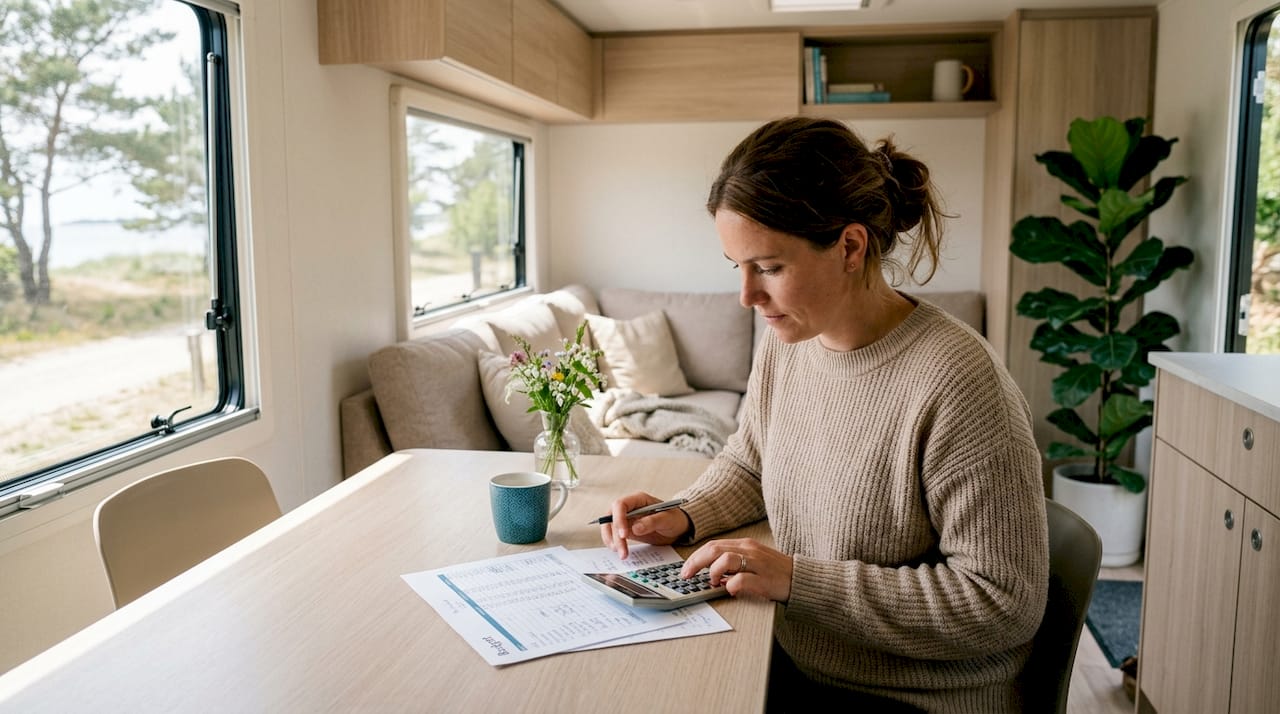
A pre-owned mobile home typically costs between €8,000 and €35,000 depending on age, size, and condition. New models from established manufacturers sit considerably higher. That initial outlay feels manageable compared to traditional property, but the ongoing costs deserve equal attention.
Monthly running costs
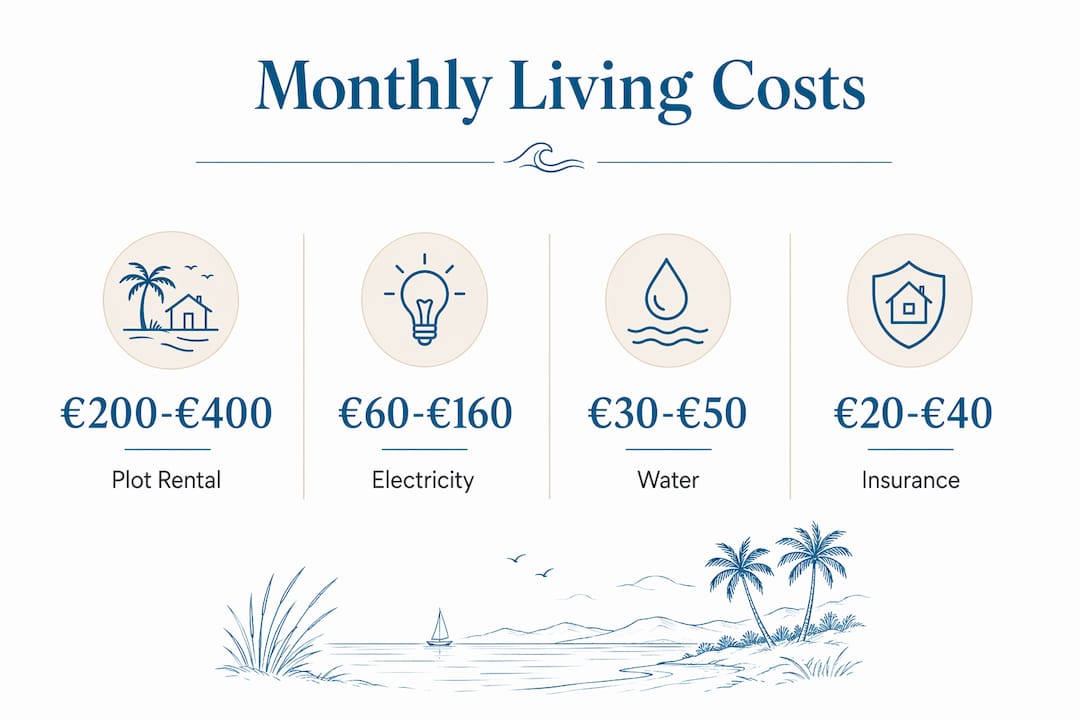
| Cost category | Typical monthly range |
|---|---|
| Plot rental (PRL or campsite) | €200–€400 |
| Electricity | €60–€180 (seasonal) |
| Water and waste charges | €30–€60 |
| Home insurance | €20–€40 |
| Maintenance and repairs | €30–€70 |
| Total estimate | €340–€750 |
Average monthly costs for living in a mobile home in France range from €450 to €750 including utilities and maintenance. Electricity is the most variable line item, swinging from around €60 in summer to €180 in winter for poorly insulated units. Upgrading insulation is one of the most cost-effective investments you can make before your first winter.
Key budget considerations:
- Plot rental contracts often include annual index-linked increases. Read the small print carefully.
- Service charges at some PRLs cover communal facilities like pools and security. These add value but also add cost.
- Resale restrictions in some contracts require you to sell through the site operator, which can affect the price you achieve.
Pro Tip: Ask the site manager for three years of historical pitch fee increases before you sign. A site that has raised fees by 8% per year will erode your savings quickly.
How do you legally establish a permanent mobile home residence?
Setting up permanent mobile home living in France follows a clear sequence. Skipping steps creates legal exposure.
- Verify year-round status. Confirm in writing that the PRL or campsite holds a 12-month operating licence. A site that closes in october or november cannot legally host permanent residents.
- Visit multiple sites. Spend at least one night at each shortlisted site. Talk to existing residents about management quality, maintenance response times, and community atmosphere.
- Review the plot rental contract. Have a French-speaking solicitor or notary check the contract before you sign. Pay particular attention to lease duration, fee escalation clauses, resale conditions, and what happens if the site changes ownership.
- Arrange your mobile home purchase. If buying pre-owned, commission an independent survey of the structure, roof, plumbing, and electrical installation. Affordable pre-owned options exist across the Vendée region with transparent pricing.
- Register utilities. Connect electricity, water, and broadband in your name. Keep all contracts as evidence of habitation.
- Sort your administrative address. A mobile home in a PRL cannot officially serve as your administrative domicile. You must retain or arrange an alternative official address for tax, banking, and government correspondence.
Pro Tip: Some associations specialise in providing domiciliation services for mobile home residents. This is a recognised and legal solution used widely across France.
What are the common pitfalls of permanent mobile home residency?
Legal rulings confirm strong municipal enforcement against unpermitted permanent mobile homes. Municipal authorities can order removal and impose fines, and French courts consistently uphold those decisions. The risks are real and worth taking seriously.
The most common pitfalls are:
- Installing on non-compliant land. Buying a plot described loosely as "suitable for a mobile home" without checking the planning classification is the single biggest mistake buyers make.
- Ignoring the domicile issue. Residents who use their PRL address for official correspondence can face complications with tax authorities and public services.
- Contractual lock-in. Some contracts limit mobile home age, resale channels, or allow forced removal at contract end. A site operator who requires you to sell through them controls your exit price.
- Assuming tolerance equals legality. Some municipalities have historically turned a blind eye to unpermitted installations. That tolerance can end with a change of mayor or a planning review.
The distinction between owning your mobile home and owning the land beneath it is fundamental. You can own the structure outright and still face eviction if the site operator terminates your plot rental agreement.
If you are placing a mobile home on private constructible land, wheels must be removed and utilities connected before the structure qualifies as a permanent residence. Failing to complete this process means the home retains its classification as a vehicle, not a dwelling, which creates its own legal complications.
What is life really like when living full-time in a mobile home in France?
Quality of life in a mobile home depends heavily on the site you choose. A well-run PRL with hedge-lined plots, a heated pool, and an active community feels very different from a tired campsite with ageing infrastructure.
Practical lifestyle factors to weigh up:
- Space and layout. Modern mobile homes offer two or three bedrooms, open-plan living areas, and full kitchen facilities. Older models can feel cramped, so visit in person before committing.
- Community. Many PRL residents form close-knit communities. Life on a well-run campsite includes shared events, neighbourly support, and a social rhythm that suits many people very well.
- Seasonal comfort. Year-round living requires adequate insulation, double glazing, and a reliable heating system. Budget for these upgrades if the home you are buying lacks them.
- Long-term planning. Site contracts are not permanent. Plan for the possibility of contract non-renewal by maintaining financial reserves and keeping your home in a condition that makes it easy to relocate if needed.
- Regional lifestyle. Choosing a location like the Vendée gives you access to Atlantic beaches, markets, and a mild coastal climate that makes year-round living genuinely pleasant. Living in the Vendée offers a pace of life that many residents describe as the main reason they never left.
The honest trade-off is this: mobile home living offers lower entry costs and a lighter lifestyle, but it requires more active management of your legal and contractual position than traditional homeownership does.
Key takeaways
Permanent mobile home living in France is legally achievable, but only through PRLs, year-round authorised campsites, or properly permitted installations on constructible private land.
| Point | Details |
|---|---|
| Legal site selection is non-negotiable | Only PRLs and year-round licensed campsites legally support permanent mobile home residency. |
| Budget beyond the purchase price | Monthly costs of €450–€750 are typical once plot rental, utilities, and maintenance are included. |
| Contract scrutiny protects you | Lease terms, fee escalation, and resale clauses can significantly affect your long-term costs and freedom. |
| Domicile requires a separate solution | A PRL address cannot serve as your official administrative domicile under French law. |
| Site quality shapes your experience | Visit multiple sites, speak to residents, and assess management before committing. |
Ludo's take: what most guides miss about mobile home living in France
Most articles on this topic focus on the purchase price and stop there. The part that actually determines whether your experience is positive or frustrating is the plot rental contract, and most buyers read it far too quickly.
I have seen people buy a perfectly good mobile home, move in happily, and then discover two years later that their contract requires them to sell through the site operator at a price the operator effectively controls. That is not a hypothetical risk. It is a clause that appears in contracts across France, and it is entirely legal.
The other thing guides rarely mention is the domicile question. Not having an official administrative address creates friction in everyday life. Opening a bank account, registering with a GP, and dealing with French bureaucracy all require a formal address. Sorting this before you move in, rather than after, saves a significant amount of stress.
My honest advice: treat the site selection and contract review with the same seriousness you would give to buying a house. The mobile home itself is almost secondary. The land arrangement, the operator's reputation, and the contract terms are what you will live with every day.
France rewards people who do their homework. The lifestyle on offer, particularly in regions like the Vendée with warm evenings, local markets, and a genuine sense of community, is genuinely worth pursuing. Just go in with your eyes open.
— Ludo
Mobile homes for permanent living in Vendée: what Caravansinfrance offers
Caravansinfrance specialises in pre-owned mobile homes at Camping Les Prairies du Lac in the Vendée, a region that combines Atlantic coastal charm with a mild year-round climate.
The homes are ready to move into, with transparent pricing and no hidden fees. Caravansinfrance handles the process clearly from start to finish, so you are not left navigating French bureaucracy alone. Whether you are looking for a compact two-bedroom or a more spacious family layout, the current listings in Vendée cover a range of budgets and styles. For buyers who want variety, the full selection of available homes gives a clear picture of what is on the market right now. The site's focus on simplicity and community makes it a strong starting point for anyone serious about permanent mobile home living in France.
FAQ
Can I legally live permanently in a mobile home in France?
Yes. Permanent residence in a mobile home is legal in France when the home is sited in a Park Résidentiel de Loisirs or a year-round authorised campsite. Installing on non-constructible private land without permits is illegal.
How much does it cost to live full-time in a mobile home in France?
Monthly costs typically range from €450 to €750, covering plot rental, electricity, water, insurance, and maintenance. Electricity costs vary most, rising sharply in winter for poorly insulated homes.
Can I use my mobile home address as my official address in France?
No. A mobile home in a PRL cannot serve as your administrative domicile under French law. You must arrange a separate official address for tax, banking, and government correspondence.
What happens if I install a mobile home on private land without permission?
Municipal authorities can enforce removal and impose fines. French courts consistently uphold these decisions, so unpermitted installations carry genuine legal and financial risk.
What should I check in a plot rental contract before buying?
The lease contract governs your rights, fees, resale conditions, and site rules. Pay particular attention to fee escalation clauses, the minimum lease term, and whether you are required to sell through the site operator.